
Suspension - WSX

World supercross championship media guy, Adam Wheeler takes us through the importance of suspension. Forks and shocks, oil and air, resistance and cushioning: How and why is suspension set-up critical for supercross.
Watch the last two WSX rounds in Sweden and South Africa right here.
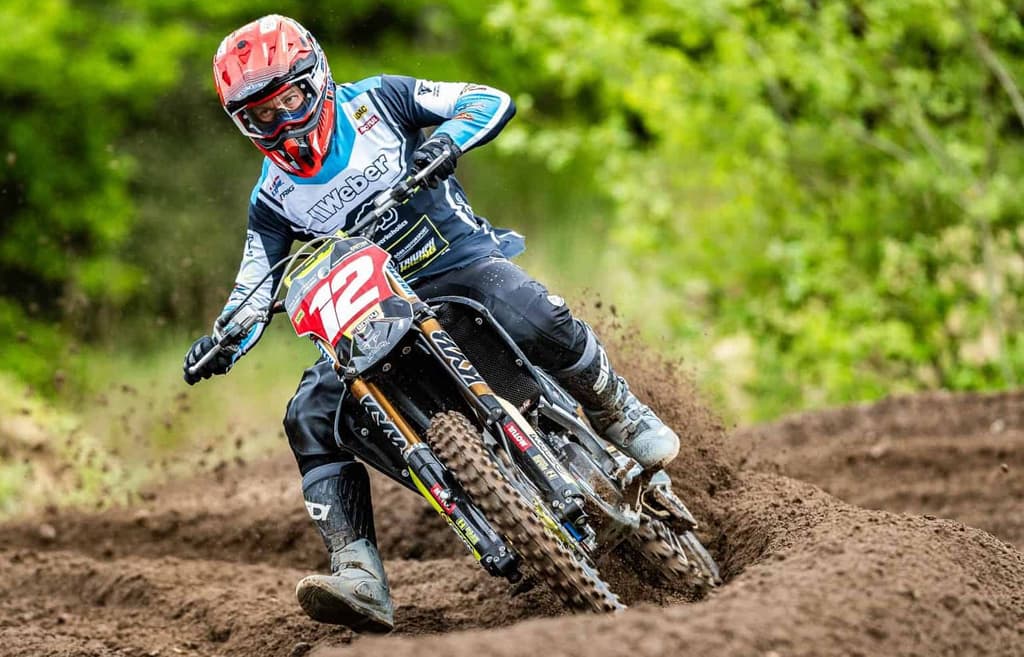
Look at a World Supercross track. It’s a layout with all those hefty jumps, landings and trail of ‘whoops’…and that’s before the dirt has carved into bumps, lumps and ruts. Seems daunting, right?
One of the first things World Supercross teams will be analysing in their preparation for the main races will be the feeling and responsiveness of the bike through all the obstacles. Racers will want to maximise grip and be able to manipulate the motorcycle to their will for whatever line they wish and at minimum physical drain.
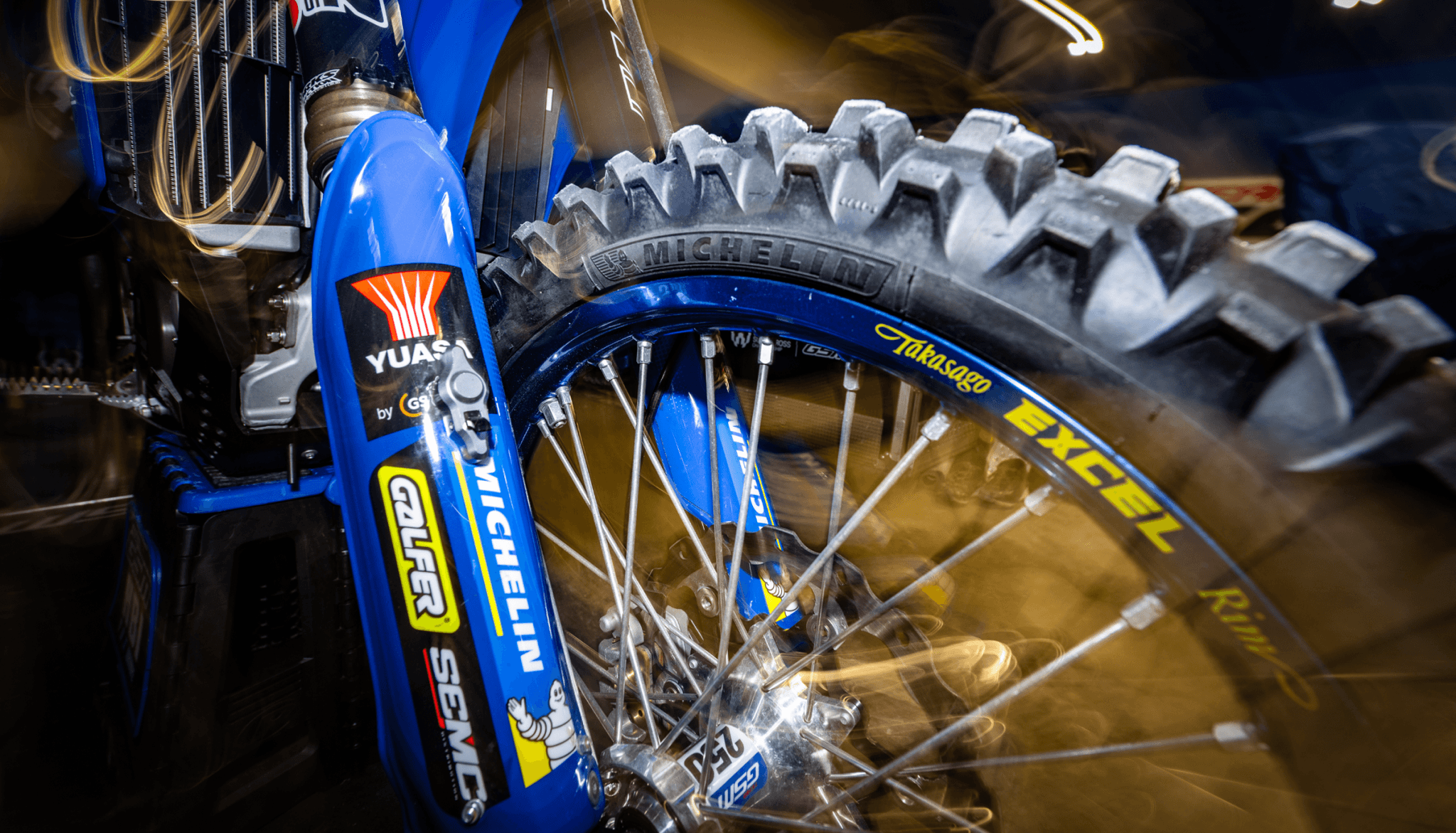
Like many things, off-road motorcycle suspension has advanced in the last few decades. In fact, many believe that the speed and ‘acrobatic’ antics that racers can perform nowadays is thanks to the durability and the efficiency of the hardware. Materials like steel, aluminium and titanium as well as other alloys mean forks and shocks are lighter and tougher. Improvements with ‘internals’ with tubes, springs, shims and air create confidence and a high level of performance, enabling the rider to hit areas of the track and know how the bike will react. Evolution also brings easier maintenance and adjustments: you’ll hear riders talking of “clicks” for a good reason.
There are some prominent companies that have led the game, names like Kayaba, WP Suspension, Showa and Öhlins. We spoke to some specialised staff – the technicians that provide a ‘race service’ at events – to understand how standard bikes are modified for World Supercross.
TOUGHEN UP
Supercross tracks are smaller and much more compact than most off-road race circuits. The quantity of jumps and the airtime for these 100kg+ bikes force the forks and shocks to be far harder and stiffer to cope with the load. Mechanics will therefore be increasing the compression (the amount the suspension can lower, up to around 25% more than they would for MX) rebound (the amount it ‘rebounds’) and the damping (the reactionary effect of these elements) as well as the spring rate on the front and bit more on the rear. The bike will be ‘rotated’ so its lowered and is better for stability in the whoops.
Fans might hear World Supercross stars speaking about “factory suspension” or “stock”. This refers to the hardware; and elite level riders will have access to the latest and best equipment (as well as alternative diameters and lengths) compared to say the versions on production machinery. Aspiring winners can also buy ‘kits’ which are an upgraded solution. It’s highly unlikely that any bike in the World Supercross gate has standard suspension; the sport is just too gnarly and demanding.
Usually, the variations are internal and cannot be spotted by the public. To prep a bike for World Supercross doesn’t require an overhaul of the spring and oil internals but the damping rate will be altered and the suspension is likely to be rigorously checked (along with the frame, swingarm and pivots) for excessive wear or critical weaknesses like cracks.
“Supercross is a lot stronger compared to motocross. There are whoops but also big jumps and triples so a lot of hard, high-speed force going through the fork and shock,” an expert from Öhlins told us. “It system needs to be quite a bit firmer to not bottom out.”
ALL ABOUT THE RIDER
Suspension is about customisation. The height, weight and style of the rider all provide a road map to get the bike ready. Then trial-and-error, which is normally a process that professionals iron-out during pre-season testing, leads to a collection of data that teams will call ‘base set-up’. From this there will be a small window of adjustment dictated by the rider and his or her crew for the track conditions or their sensitivity on each given evening.
What do riders need? Stability is a big requirement, and then traction out of turns while also retaining some agility for those tight 180 supercross corners. Consistency is another aspect: racers want to be sure that they know what the bike will do if they commit to any section of the track. 90% of suspension work for World Supercross will have been done before the race. The final 10% comes down to the stadium, the dirt, the weather and more on the day.
Suspension is of the biggest changes that can be made to the bike in a race weekend,. It allows the rider to get comfortable and therefore run his speed. Everyone has their own feeling. The level of comfort depends; some like the rear end quite soft coming out of the flat turns. Others like it hard and obviously to get good traction for the slicker tracks.
RIDING ON AIR
Developments in suspension have tended to suit the level of engineering of motorcycle chassis. Motocross frames are now even more complex in terms of rigidity and flex. The way the chassis reacts to engine power and the physics of off-roading has been a persistent theme of experimentation for manufacturers.
Dirtbikes might not look radically different year upon year but how they feel, along with the chemistry of how various components come together is relentlessly on the move. Suspension plays a big part, and specialist companies look to make their own gains. Air technology is hardly new (it was around in the 1970s as a new-fangled way to cushion the bike) but it has improved to a point on the forks where it is a legitimate choice for professional racers.
It comes down to feel and preference. Instead of a main spring the system is compensated with air force. The more you increase this force the more it’s like riding with a harder spring.
Suspension manufacturers persevered with air shocks for supercross but this area was a little more troublesome, as any leak in the seal would lead to a failure. A spring is far more consistent and dependable but also heavier than an air chamber.
Damping is an ongoing field of discovery and some of the secretive ingredients of these supercross racing ‘tools’ for riders is constantly being refined.
The next time a rider bounces through whoops or lands from a 40ft jump a few metres away, then marvel at the heat, the reaction, the speed and the potential of this area of motorcycle construction.